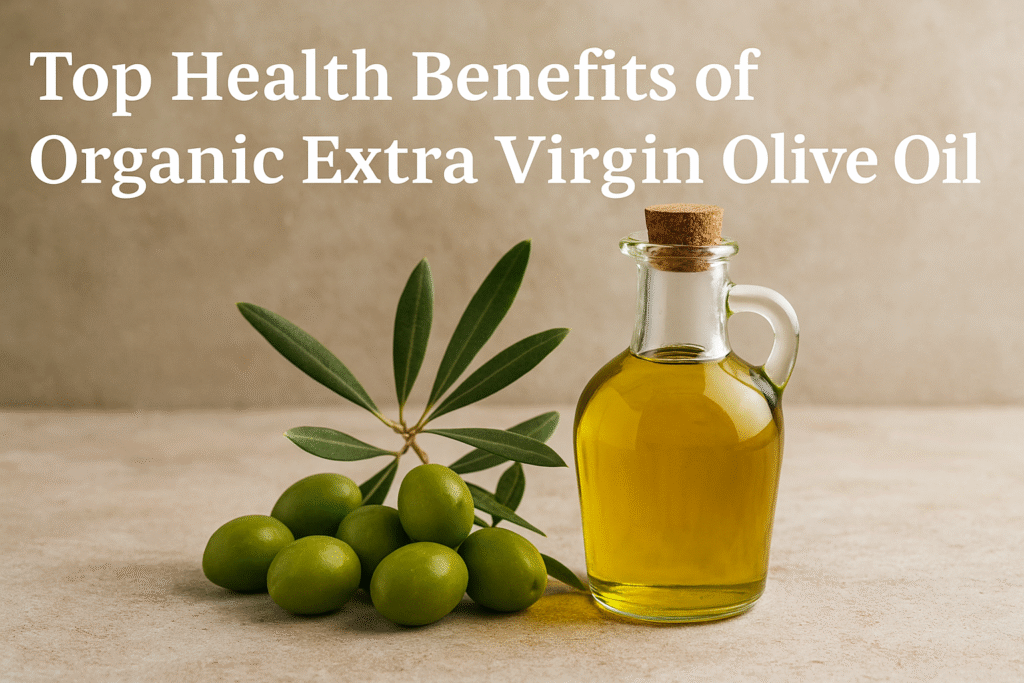
Top Health Benefits of Organic Extra Virgin Olive Oil
Organic extra virgin olive oil (sometimes abbreviated OEVOO) is more than just a Mediterranean staple cuisine — it’s a functional food with vastly different health effects for those that: if you want to eat healthy, choose quality and live longer OEVOO offers several amazing benefits. Here’s what makes it so good: its main health advantages, tips for choosing a “good” oil, and a review of the scientific illustrative work supporting its use.
What Does “Organic Extra Virgin Olive Oil” Mean?
Key Health Benefits
Cardiovascular Health & Heart Disease Prevention
OEVOO is rich in monounsaturated fatty acids (MUFAs), especially oleic acid; which can help lower LDL (“bad”) cholesterol and may support or raise HDL (“good”) cholesterol. The oil’s antioxidant and anti-inflammatory components help protect blood vessels, reduce blood pressure, and reduce clotting risk. Regular use in diets (especially when substituting saturated fats) is also strongly associated with lower risks of heart attack, stroke, and cardiovascular mortality.
Anti-Inflammatory Effects
Chronic inflammation underpins many modern diseases—arthritic conditions, metabolic syndrome, insulin resistance, etc. OEVOO contains natural anti-inflammatory substances, like oleocanthal, hydroxytyrosol, and phenolic compounds, which work in multiple pathways (e.g., reducing pro-inflammatory cytokines) to dampen inflammation.
Antioxidant Protection
Oxidative stress causes damage to cells, accelerates aging, and contributes to many disease processes (cancer, heart disease, neurodegeneration). The phenolic compounds in OEVOO act as antioxidants, neutralizing free radicals, protecting lipids (including cholesterol), proteins, and DNA from oxidative damage.
Better Blood Sugar Control and Type 2 Diabetes Risk Reduction
Diets featuring OEVOO (especially Mediterranean-style diets) appear to improve insulin sensitivity, reduce fasting blood glucose, and decrease risk of developing type 2 diabetes. The phenolics may also be damaging the gut microbiome and metabolic signaling, helping glucose metabolism.
Weight Management and Metabolic Health
The issue of calories in olive oil is, it’s fat quality (MUFAs + bioactives) helps with satiety, lipid metabolism, and reducing fat accumulation. It uses up better fats in the diet to make your body’s composition better. Highly processed oils.
Neuroprotective Effects & Brain Health
OEVOO has compounds that may protect the brain from oxidative damage and inflammation. Some observational studies link higher olive oil intake with lower risk of cognitive decline, Alzheimer’s, or other neurodegenerative diseases. It may also support better blood flow and neuron resilience.
Cancer Risk Reduction
Some types of cancer, like breast cancer and colon cancer, seem to be very rare in populations with high consumption of OEVOO. Antioxidants and anti-inflammatory agents may help reduce DNA damage, inhibit cancer cell proliferation, and induce apoptosis (programmed cell death) in malignant cells.
Improved Digestive Health & Gut Microbiome Support
OEVOO may aid digestion by stimulating bile secretion, supporting enzyme activity, and protecting the lining of the digestive tract. Its phenolic compounds may also be prebiotics / influence gut bacteria in a helpful way. Can have systemic effects (on immunity, metabolism, inflammation).
Extra Virgin and Organic
Extra virgin: the highest quality olive oil. It comes from the first cold pressing of olives without any chemical solvents or high temperatures. Keeps them fresh. Delicate compounds such as polyphenols and antioxidants.
Organic: the olives are grown without synthetic fertilizers, pesticides, or GMOs; processing under stringent conditions so as not to give chemical residues / to protect both human health and the environment.
Why it matters: OEVOO retains more of the beneficial micronutrients and bioactive compounds than refined oils. Those compounds are what make so many of them the health effects.
Other Benefits: Skin, Bones, Longevity
OEVOO’s antioxidants help protect skin from oxidative damage and UV stress. Some studies suggest benefit for bone health (helping maintain bone density through anti-osteoclastic effects). Overall mortality (all-cause death) usually decreases in populations that consume less of quality olive oil.
How to Choose, Store, and Use OEVOO for Maximum Benefit
Quality indicators: Look for harvest date, origin, certifications (organic, extra virgin, preferably those that test for polyphenols), dark glass bottles (to reduce light damage), sealed containers.
Flavor cues: Fresh OEVOO often tastes grassy, peppery, slightly bitter. Those qualities are indicators of active phenolics.
Storage: Keep in a cool, dark place. Avoid heat, direct light, long storage. Heat and light degrade phenolic content.
Usage: Drizzling for dressings / drizzle for dishes. Use for low- to moderate-heat cooking. To preserve bioactive compounds, avoid overheating it.
Amount: At most, daily amounts are good enough: replacing less healthy fats / oils. Greater effect in your diet with OEVOO than adding more oil.
Scientific Research & Evidence
Here’s a summary of recent studies:
|
Study / Review |
Key Findings |
Notes / Details |
|
“Exploring the Benefits of Extra Virgin Olive Oil on Cardiovascular Health Enhancement and Disease Prevention: A Systematic Review” (2025) |
EVOO (as part of Mediterranean diet) is strongly associated with reduced risk of cardiovascular disease. Improvements were seen in markers such as lipids, endothelial function, inflammation. |
The review emphasized polyphenols as key agents. Human clinical studies included; though more large-scale studies needed. MDPI |
|
“Extra virgin olive oil: more than a healthy fat” |
EVOO influences “nontraditional” cardiovascular risk factors — e.g. reduces oxidative stress, improves endothelial function, enhances fibrinolysis, reduces platelet aggregation, etc. |
This shows that its benefits go beyond lowering LDL alone. PubMed |
|
Oleocanthal-rich EVOO and neuroprotective/anticancer potential |
The minor phenolic oleocanthal (found only in high-quality EVOO) exhibits strong antioxidant and anti-inflammatory activity; in preclinical models it shows potential to reduce cancer cell growth & protect neurons. |
Though many findings are from cell or animal studies; human clinical trials are far more limited in this regard area. PubMed |
|
Metabolic, Mortality, and Disease Outcomes |
Observational studies show higher olive oil consumption is associated with lower all-cause mortality, lower cardiovascular mortality and cancer mortality. Also reduced risk of type 2 diabetes in high olive oil users. |
Observational data can’t prove causality, but many are consistent across populations. Olive Wellness Institute |
|
Regulatory/Health Authority Endorsements |
EFSA acknowledges a health claim for polyphenols in olive oil: consume at minimum 5 mg of hydroxytyrosol and its derivatives per 20 g olive oil contributes to protection of blood lipids from oxidative damage. |
This underlines that the specific bioactive components, not necessarily just fat content, are of great importance. MDPI |
Limitations & Things to Be Mindful About
- Quantity matters: While OEVOO has many benefits, it’s still calorie dense (~120 calories per tablespoon), so over-consumption without balancing energy needs can lead to weight gain.
- Temperature sensitivity: High heat (e.g., deep frying) can degrade phenolic compounds. For many benefits, using OEVOO cold (salad dressings, finishing dishes) preserves more bioactives.
- Variability: Not all OEVOO is equal. Polyphenol content, purity, freshness, and cultivation practices (soil, climate, olive variety) make a big difference. “Organic” helps reduce chemical exposure, but doesn’t guarantee the high phenolic content in case of poor processing or storage.
- Low trial size in some areas: Many of the more exciting benefits (neuroprotection, cancer prevention) are from animal or cell culture studies; more long-term, randomized human clinical trials are still needed.
Practical Takeaways
- Include OEVOO regularly by replacement of fats that are less healthy (trans fat, processed seed oils, saturated fats) rather than adding it in addition.
- Use OEVOO raw wherever possible (dressings, dips, finishing); use moderate heat when cooking.
- Choose high quality: look for organic, extra virgin, recent harvest, good storage.
- Pair with an overall healthy diet (fruits, vegetables, whole grains, lean protein) and lifestyle (exercise, sleep, stress management) for synergistic effects