The Importance of Protein for Healthy Living
A balanced diet is the foundation of a healthy life—and one of the key elements of that balance is protein, which many people often underestimate. This article discusses why protein is so important, how it supports various systems in our body, how to ensure adequate protein intake, and what recent scientific research has to say about it.
What Is Protein and Why Is It Necessary?
Protein is a large molecule made up of long chains of amino acids. It plays several important roles in the body:
- Structural role: Helps build muscles, bones, skin, hair, etc.
- Functional role: Used to make enzymes, hormones, antibodies, etc.
- Regulatory role: Plays a role in the body’s fluid balance, pH regulation, and nutrient transport.
Unlike fats and carbohydrates, the body cannot store the amino acids from protein for a long time. Therefore, it is essential to consume protein through food every day.
How Protein Supports a Healthy Lifestyle
- Muscle Growth, Repair, and Maintenance
Micro-damage occurs in muscles during exercise or physical activity. Protein helps rebuild this damaged tissue, making it stronger.
Studies have shown that consuming enough protein increases muscle mass and strength. Protein is also essential for slowing down the process of muscle loss (sarcopenia), which occurs naturally with age.
- Weight Management and Body Composition
Protein provides a relatively high level of satiety, which helps reduce hunger and overall calorie intake.
It also requires more energy during digestion and metabolism, which can slightly increase the metabolic rate.
- Bone Health
It was once thought that too much protein (especially animal protein) could damage bones. However, modern research has shown that adequate protein actually helps maintain bone density—especially when combined with physical exercise.
- Immunity, Hormones, and Tissue Repair
Many components of the body’s immune system, including antibodies and cytokines, are made of protein. Many hormones and chemical messengers are also protein-dependent. Protein deficiency can weaken these systems.
- Maintaining Good Health in Old Age
Protein deficiency is quite common among older adults. It leads to reduced muscle strength, an increased risk of falls, and decreased immunity. Regularly consuming adequate protein helps maintain health and performance in old age.
How Much Protein Is Needed and What It Depends On
In general, an adult needs about 0.8 grams of protein per kilogram of body weight daily. This is a minimum requirement and not necessarily optimal for body function.
Reasons for increased protein needs include:
- Aging
- Physical activity or exercise
- Efforts to lose weight (while maintaining muscle mass)
- Recovery from illness or injury
Studies have shown that in many cases, a protein intake of 1.2–1.6 g/kg/day may be more beneficial. Also, eating protein evenly throughout the day (rather than consuming too much at once) is more effective for the body.
Ways to Add Quality Protein to Your Daily Life
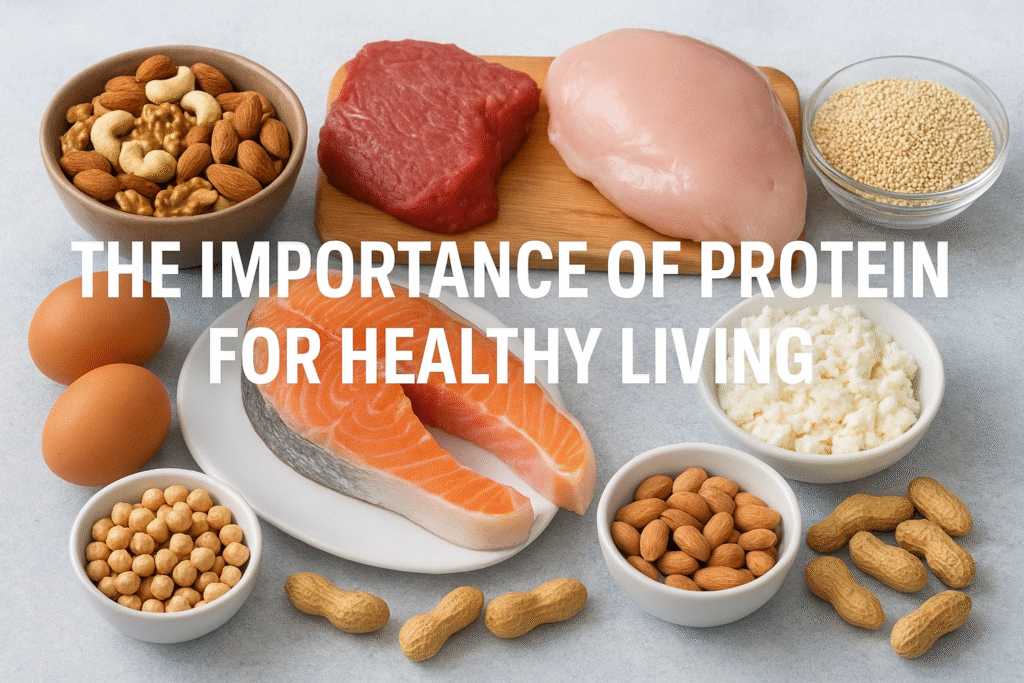
- Get protein from a variety of sources: lean meat, fish, eggs, dairy products, pulses, nuts, seeds, tofu, etc.
- Try to include protein in every meal (about 20–30 g per meal).
- Maintain a balance between animal and plant proteins—plant sources are higher in fiber and antioxidants.
- Combine protein intake with strength-based exercises (such as resistance training).
- Older adults should consciously consume more protein-rich foods if their appetite decreases.
- Limit highly processed protein products (powders, bars, etc.)—natural sources are best.
Caution
- While protein is important, too much is not always beneficial. Excess protein can put strain on the kidneys in some cases.
- The source of protein matters: eating too much processed meat may increase the risk of certain diseases, while plant protein is generally protective.
- People with kidney problems or specific dietary requirements should consult their doctor.
Summary of Recent Scientific Research
- A large review found that the average requirement for quality protein is about 0.66 g/kg. Plant protein helps lower blood pressure, and soy protein reduces LDL cholesterol.
- A 2020 review found that consuming additional protein (above the RDA) along with exercise has a positive effect on muscle and fat management.
- An analysis of 65 studies found that the timing of protein intake (such as before or after exercise, or spread throughout the day) has a significant impact on muscle growth.
- A study titled “Dietary Protein Quantity, Quality, and Exercise Are Key to Healthy Living” found that current recommended amounts only meet minimum needs; consuming more and more evenly distributed protein is beneficial for healthy muscles and metabolism.
- Studies conducted on older adults have shown that consuming more than 0.8 g/kg of protein improves muscle strength, physical performance, and bone health.
- A recent study from 2025 stated that the ideal amount of protein depends on age, weight, source, and overall diet quality; therefore, more precise research on protein intake is needed.
Conclusion
Protein is essential for almost every function of our body.
Consider consuming not just the minimum, but adequate and high-quality protein evenly throughout the day, which supports muscles, metabolism, bones, immunity, and overall well-being.
However, this is not the only solution—a balanced diet, adequate sleep, and regular exercise are also important in addition to protein.
The best protein sources are natural and minimally processed foods, which are both nutritious and safe.