
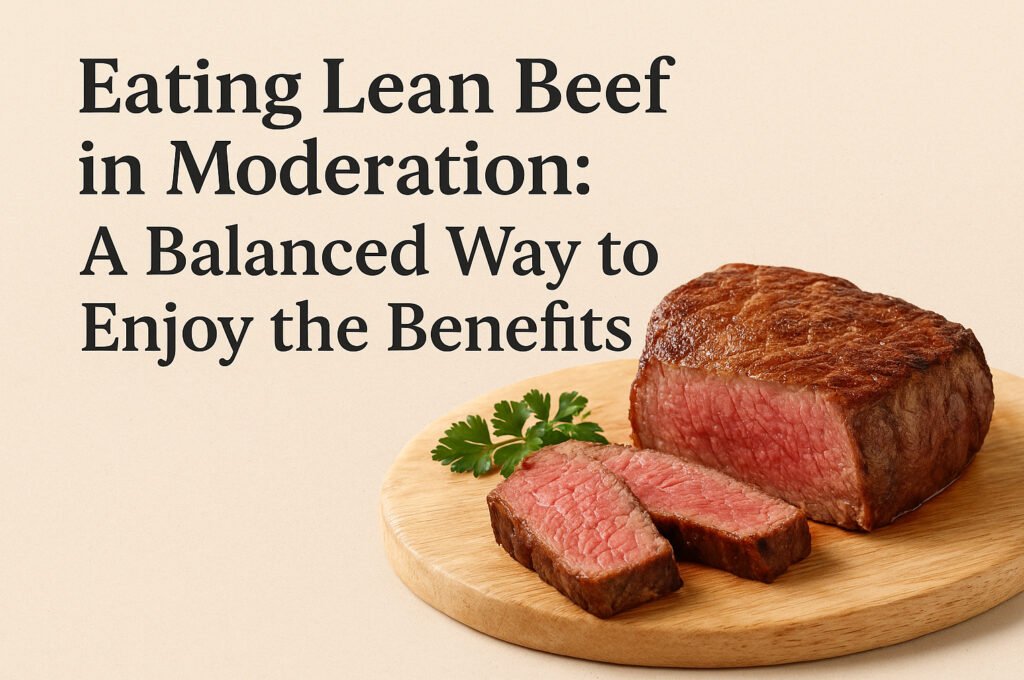
Moderate Consumption of Fatty Beef: A Balanced Approach to Enjoying Its Benefits
Fatty cuts of beef—such as ribeye, brisket, or marbled cuts of meat—are often criticized. The idea is that eating too much can increase your risk. But the truth is, when eaten in moderation, this meat offers great nutritional value and cooking flavor.
This article for Natural Health Fusion readers outlines the benefits, risks, and scientifically backed advice for safely consuming lean beef.
Why do people prefer lean beef?
Fatty meat has a much higher flavor, tenderness, and juiciness than other cuts. Not only are these cuts delicious, they also provide:
- High-quality protein, which helps build and repair muscle
- Easily absorbed heme iron, zinc, selenium, and vitamin B12
- Fat-soluble vitamins and fatty acids, including a small amount of beneficial CLA (Conjugated Linoleic Acid)
These nutrients are especially beneficial for—
people with low red blood cell counts, the elderly, athletes, pregnant women (with a doctor’s advice), and those following a low-carb diet.
Overeating can cause problems
Several studies show that eating excessive amounts of red and processed meat can increase the risk of heart disease, type 2 diabetes, and some cancers.
Processed meat (sausages, bacon, salami, deli meats) is particularly harmful, as it contains:
- Excess saturated fat
- High levels of sodium
- Preservatives
- Carcinogens produced by high-heat cooking
Balanced approach
There is no need to completely eliminate it.
Overall food quality, type of cooking, and quantity—these three factors determine risk.
People who eat a lot of meat are at higher risk, but eating meat a few times a week, in the right amount and balanced with your diet, is relatively low risk. Many studies have shown that moderate red meat is not very dangerous, but excessive consumption can be harmful.
Realistic advice for moderate consumption
- Control the quantity
- 70–100 grams (2.5–3.5 ounces) of cooked meat per meal is enough
- Keep red meat to a total of 350–500 grams (cooked weight) per week
- Seek advice based on your personal health status
- Reduce processed meat
- Sausages, hotdogs, bacon, salami—limit these as much as possible
- Choose fresh meat, as processed meats are the main culprits in increasing disease risk
- Cooking method matters
Healthy methods:
- Braising
- Stewing
- Slow cooking
- Sous-vide + light searing
Unhealthy methods:
- Grilling directly over a coal fire
- Additional charring
- Very high heat
Marinating reduces the potential for harmful compounds to form.
- Trim fat
Cut off excess visible fat.
Pair your meat with plenty of vegetables, legumes, salads, or whole grains—they provide antioxidants and fiber, which can reduce the potential risks of meat.
- Consider quality
Grass-fed or free-range beef has been shown to have:
- Slightly more CLA
- Slightly more omega-3
—although the actual health impact is still inconclusive.
- Make your own health decisions
People with:
- High LDL
- High blood pressure
- Chronic kidney disease
- Gout
- Family history of colon cancer
should consult their doctor.
Some healthy but tasty meal ideas
- Vegetable stir-fry using less ribeye
- Slow-cooked beef and barley stew
- A little brisket in a salad bowl or grain bowl
- Use 50% meat + 50% mushrooms/lentils in minced meat
About sustainability and the environment
Eating meat in moderation from time to time is not only good for health—it is also better for the environment.
Fish, lentils, nuts, eggs, and tofu—using them more reduces environmental impact and increases dietary diversity.
Scientific research — in brief
- Health risks of red and processed meat
Many large-scale studies and meta-analyses show that—
- Excess red meat
- and especially processed meat
increases the risk of heart disease, type 2 diabetes, and cancer.
- Moderate red meat has relatively low risk
A large-scale umbrella review shows that—
the risk of moderate red meat consumption is “weak” or “mild”—that is, the risk is low if the daily diet is balanced.
- WHO–IARC classification
- Processed meat → Group 1 carcinogen
- Red meat → Group 2A (probable carcinogen)
Therefore, public health guidelines recommend reducing processed meat and keeping red meat in moderation.
- CLA (Conjugated Linoleic Acid) research
Some studies have suggested that CLA has anti-inflammatory and metabolic weight-control benefits.
However, its effect is limited—it is not a reason to eat more meat.
- International dietary guidelines
The dietary guidelines of many countries emphasize—
- Various protein sources
- Low saturated fat
- Low processed meat
Summary
Fatty beef is not something to avoid completely—in moderation, when cooked healthily, and as part of a balanced diet, it can provide both nutritional and flavor benefits.
The key rules are:
- Control portion sizes
- Reduce processed meats
- Cook at low heat
- Eat with plenty of vegetables and whole grains
- Make personal health decisions