
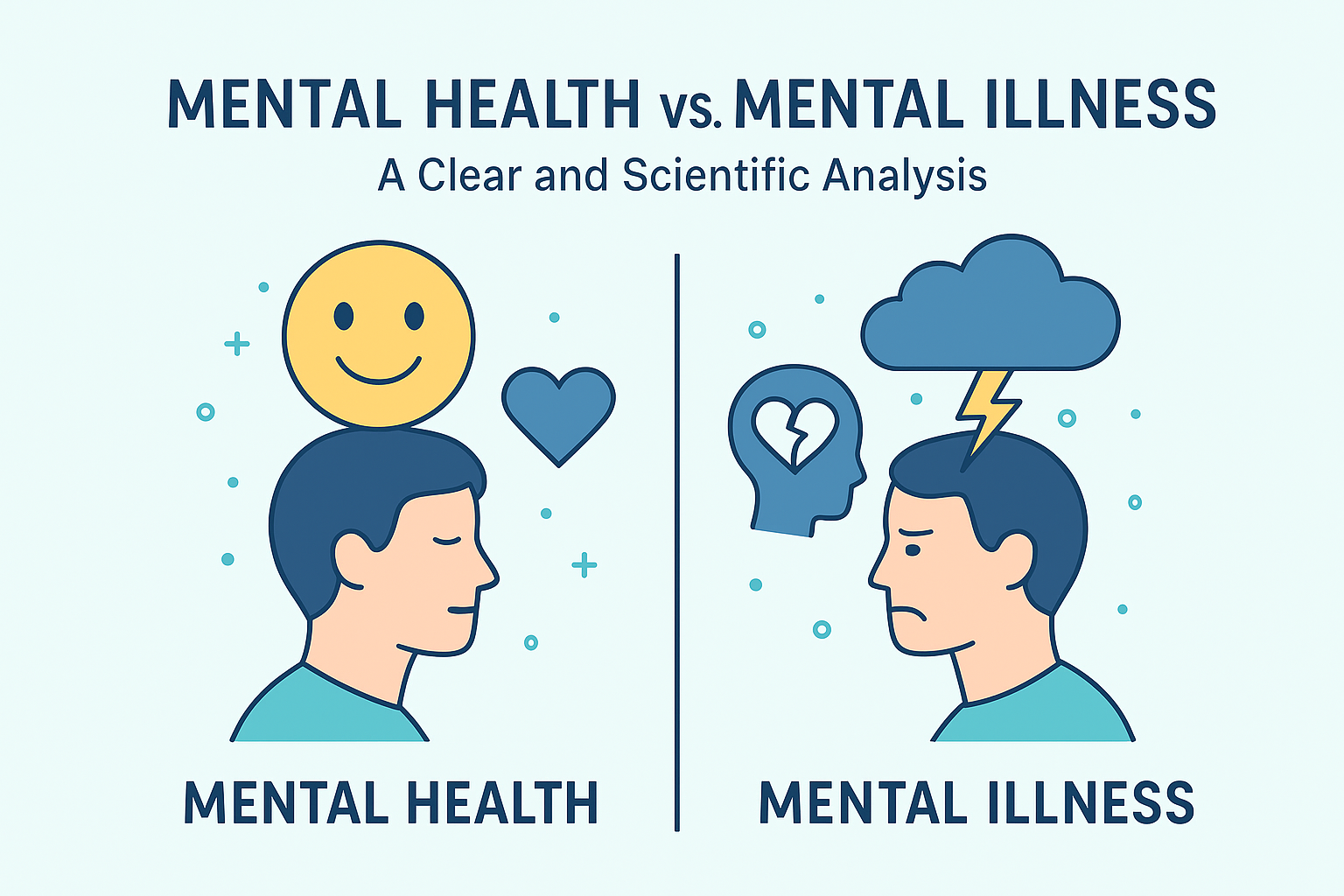
Mental Health vs. Mental Illness — A Clear and Scientific Analysis
In short: Mental health is a dynamic state of psychological and social well-being that exists in everyone and can be good or bad. Mental illness is a specific medical condition (such as depression, anxiety disorders, bipolar disorder, schizophrenia, etc.) that, when meeting certain criteria, is considered a disease and requires treatment. Understanding this distinction helps us reduce stigma, get the right care, and move toward appropriate support.
- What it means — Explaining the two terms
Mental health
Mental health refers to how a person thinks, feels, and acts — emotionally, mentally, and socially. It determines how we handle stress, relate to others, make decisions, and enjoy life. Importantly, mental health is not just the absence of disease; it is a positive asset and part of overall health.Mental illness (or mental disorder)
A mental illness is a clinical syndrome characterized by persistent changes in thinking, mood, or behavior that cause distress or interfere with daily life. Doctors use specific criteria (such as the DSM-5-TR or ICD) to diagnose these disorders.- Key differences in a nutshell
- Scope: Mental health — applies to everyone; mental illness — a specific disease or condition.
- Continuum vs. category: Mental health is variable (a continuous line); mental illness is defined based on specific symptoms.
- Prevention vs. treatment: Preventive measures are important to maintain mental health, but treatment is necessary for mental illness.
- Everyday feelings vs. clinical limits: Temporary sadness or anxiety is normal; however, if it is prolonged and interferes with daily life, it may be a sign of illness.
- Why it’s important to know the difference
- Reduces stigma. When mental health is viewed as part of overall health, people are less likely to feel ashamed of mental illness and more likely to seek help.
- Helps in setting treatment and care goals. It is easier to work at both levels – mental health promotion and preventive measures for the general population, and diagnostic treatment.
- It is easier to formulate preventive policies. Social support, relationships, and economic stability play an important role in reducing the risk of mental illness.
- Causes of mental health and illness — a multidimensional picture
4. Some of the important factors that affect mental health are:
- Biological factors: genetics, brain chemical balance, neurological structure.
- Psychological factors: personality, coping skills, childhood trauma.
- Social and environmental factors: poverty, discrimination, job stress, loneliness, etc.
According to experts, these social factors greatly increase the risk of mental illness, so policy changes and social support are very important.
- When and how do doctors diagnose mental illness
Doctors diagnose mental illness by judging the type, duration, severity, and impact on daily life of symptoms according to criteria such as the DSM (Diagnostic and Statistical Manual) or ICD. This helps guide the right treatment and therapy.
- Treatment and support — care as needed
- Mild or temporary problems: lifestyle changes, exercise, sleep, support from friends or family, brief therapy.
- Moderate to severe problems: psychotherapy (CBT, interpersonal therapy, etc.), medication, social support, hospitalization if necessary.
- Integrated approach: A combination of mental, physical, and social support works best.
In recent years, digital therapy, online counseling, and telemedicine have increased access to mental health care.
- Simple and effective ways to maintain mental health
Some scientifically proven ways are:
- Adequate sleep and a balanced diet
- Regular physical activity
- Social relationships and positive associations
- Meditation, breathing exercises, and stress management
- Avoiding drugs and alcohol
These steps increase mental stability and prevent the development of illness.
- When to seek professional help
- Symptoms last more than a few weeks
- Problems with work, relationships, or self-care
- Thoughts about suicide or harming others
- Excessive use of drugs or alcohol to cope with stress
In such situations, it is important to seek medical advice promptly.
- Summary of recent scientific research
- The impact of social factors: Economic inequality, housing instability, and discrimination have a profound impact on mental health. Therefore, societal policy changes are important in preventing mental illness.
- The rise of digital therapies: Online CBT, mobile apps, and teletherapy have been shown to be effective in reducing depression and anxiety, but maintaining quality and ensuring regular use remain challenges.
- The gut-brain connection: Recent studies have shown that the gut microbiome and inflammation affect mental health. However, this area is still under research.
- New treatment: Controlled use of substances like psilocybin has helped reduce symptoms of depression in some studies, but more research is needed on its safety and long-term effects.
- Practical advice for NaturalHealthFusion readers
- Recognize the continuum of mental health: It is not a fixed state, but a matter of ongoing care.
- Follow evidence-based practices: sleep, exercise, relationships, and stress management.
- Be vigilant: It is important to know when to seek treatment.
- Emphasize the social aspect: Work, education, and social support are the foundations of mental well-being.
- Further reading and references
- World Health Organization (WHO) — Mental Health Definitions and Guidelines
- American Psychiatric Association — DSM and Diagnostic Process
- Kirkbride J.B. et al., The social determinants of mental health and disorder (2024)