
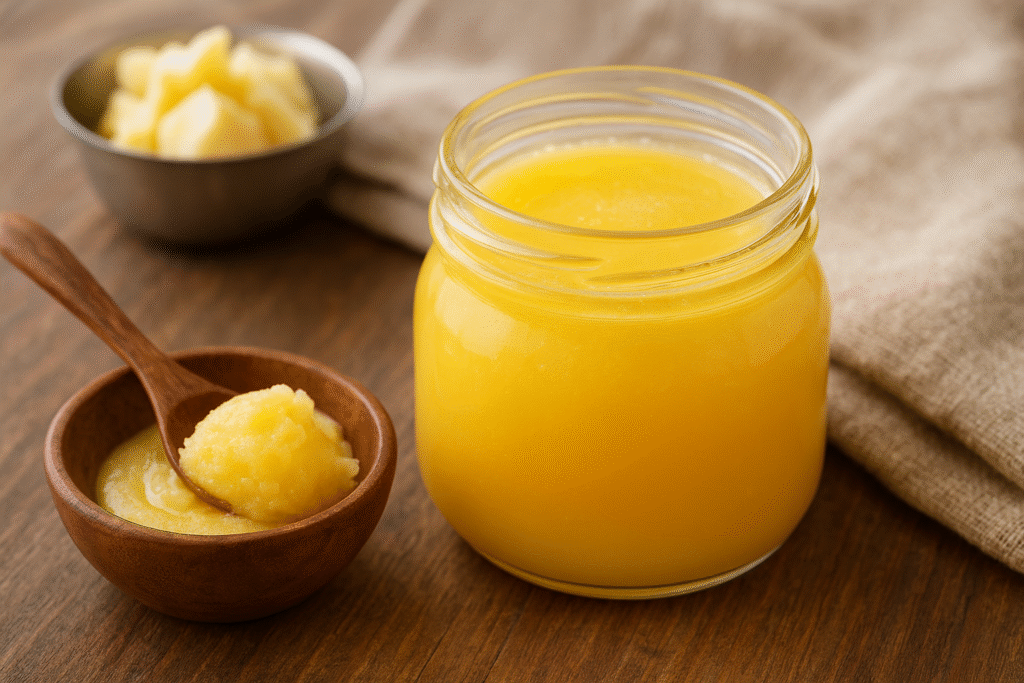
The Amazing Health Benefits of Pure Ghee (Clarified Butter): A Timeless Superfood
Ghee — or pure clarified butter — has been an important part of Indian cuisine and Ayurveda for thousands of years. It is made by slowly heating butter, allowing the water and milk solids to separate, leaving behind a golden, fragrant, and long-lasting natural fat. In recent years, ghee has become popular again around the world, especially among health-conscious people looking for a traditional and nutritious fat.
What Is Ghee?
Ghee is butter that has had its water and milk proteins (casein and whey) removed through slow heating. This process results in almost pure milk fat — mostly saturated fat, with small amounts of mono- and polyunsaturated fats — and contains bioactive compounds such as fat-soluble vitamins (A, D, E, K), conjugated linoleic acid (CLA), and butyric acid.
Since it does not contain milk solids, many lactose-sensitive people can easily digest ghee.
Main Health Benefits of Ghee
- Helps with Digestion and Inflammation
Ghee contains butyric acid, which acts as the main energy source for intestinal cells and keeps the intestinal walls strong. Modern studies have shown that butyrate plays a role in reducing intestinal inflammation, maintaining the balance of the gut microbiome, and protecting the overall digestive system.
- Suitable for High-Heat Cooking
Ghee has a very high smoke point, meaning it does not oxidize easily at high temperatures. As a result, it does not produce harmful compounds during frying compared to many other oils or butter. Those who use ghee can safely fry or roast, as long as the amount is kept moderate.
- Helps with the Absorption of Fat-Soluble Vitamins and Nutrients
Ghee is a natural source of vitamins A, D, E, and K. These vitamins require fat to be absorbed by the body, so ghee increases the absorption of these vitamins in food. In addition, the CLA compound it contains can have a positive effect on metabolism and immunity.
- Ghee in Ayurveda
In Ayurveda, ghee is called an “ojas” enhancer — it helps with energy, memory, skin, and digestion. Modern research also shows that the components in ghee may explain these effects due to its anti-inflammatory and antioxidant properties, although more clinical trials are needed.
- Energy and Satiety
Some of the fatty acids in ghee (such as medium-chain and short-chain) are quickly converted into energy, giving the body a quick energy boost. In addition, adding a little ghee to food helps keep the stomach feeling full for a longer time.
Healthy Ways to Use Ghee
- Use in moderation. Ghee is nutritious but high in calories. Use it as a substitute for other fats, not as an addition.
- Use for high-heat cooking. Ghee works great when frying, roasting, or sautéing and adds a lovely aroma to food.
- Eat with vegetables or pulses. Ghee helps with the absorption of vitamins from vegetables — so adding a little ghee to steamed vegetables is beneficial.
- Check the quality. Ghee made from grass-fed cow’s milk is usually more nutritious. Choose local or minimally processed ghee.
- Allergy awareness. Lactose and casein are almost completely removed but may still be present in small amounts. People with severe milk allergies should not consume ghee without consulting a doctor.
People Who Should Be Careful
- If you have heart disease or high cholesterol: Ghee is mainly saturated fat. Recent studies have shown that saturated fat is not entirely harmful, but if someone is at risk of high cholesterol or heart disease, the amount of ghee consumed should be adjusted based on a doctor’s advice.
- Keep calories in check: Ghee is very calorie-dense, so consuming too much can lead to weight gain.
- Storage precautions: Ghee will keep well for a long time if stored in a cool, dry place. However, it can spoil quickly if exposed to water or moisture.
Some Easy Ways to Enjoy Ghee
- Mix a teaspoon of ghee with oatmeal or mashed sweet potatoes in the morning.
- Use ghee as a cooking oil when roasting vegetables or potatoes.
- Brush a little ghee on whole-wheat toast or steamed vegetables.
- Mix a pinch of turmeric and cayenne pepper into melted ghee — it makes a great anti-inflammatory dressing.
Scientific Research Highlights
- Modern Analysis of Ghee and Ayurveda (2024): A recent review found that ghee may have potential roles in digestion, anti-inflammatory effects, and immune function, although larger clinical trials are needed.
- Butyrate and Gut Health (2023–2025): Various reviews have shown that butyrate in ghee strengthens intestinal cells, reduces inflammation, and protects the gut barrier — providing scientific support for ghee’s digestive benefits.
- Ghee vs. Olive Oil Comparative Study (2022): A controlled study found that a ghee-rich diet can alter blood lipid profiles in some cases, which may be a warning sign for people at risk of heart disease.
- Population-Based Observations: Some studies in India have found that people who traditionally consume ghee have relatively low rates of heart disease, but their samples and controls are limited — so more research is needed to draw firm conclusions.
- Cooking Stability Studies: Laboratory tests have shown that ghee oxidizes relatively little at high temperatures, and its stability is further enhanced by the addition of certain herbal ingredients.
Conclusion — Is Ghee Really a “Superfood”?
Ghee is a naturally nutritious, flavorful, and versatile fat that has been used since ancient times. It can provide a variety of benefits to the body due to its CLA, butyric acid, and fat-soluble vitamins. However, it is wise to consume it in moderation, especially for those with high cholesterol or heart disease.
In short: Ghee is a nutritious and safe cooking ingredient if consumed in moderation and as part of a balanced diet.