
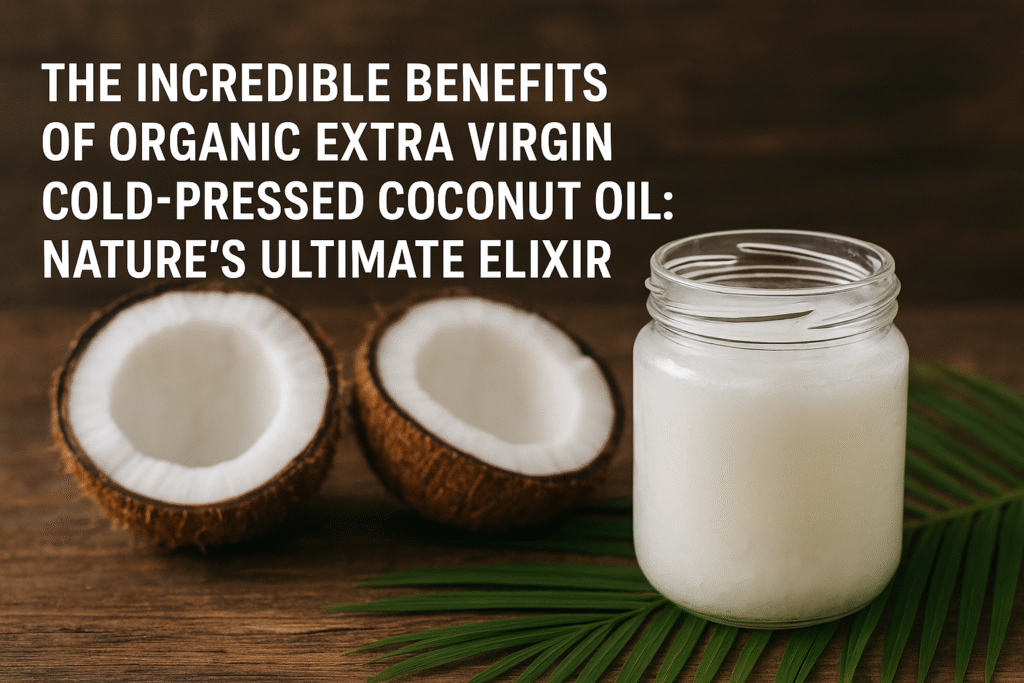
The Incredible Benefits of Organic Extra Virgin Cold-Pressed Coconut Oil: Nature’s Ultimate Elixir
In the world of natural health, some foods aren’t just one-time trends—they’re timeless and packed with versatile benefits. One of them is organic extra virgin cold-pressed coconut oil. Known as “nature’s ultimate elixir,” this oil is nourishing, comforting, and rich in medicinal benefits for the body and skin. Let’s take a look at how it’s made, how it works, and what science says about its benefits.
How It’s Different: Organic, Extra Virgin, Cold-Pressed
It’s important to understand what each term means:
- Organic: Coconuts grown without chemical fertilizers, pesticides, or herbicides. This method helps retain the nutrients and natural flavor.
- Extra Virgin/Virgin: The oil is extracted from raw coconut meat—without drying and without any chemicals.
- Cold-Pressed: The oil is extracted through mechanical pressure without the application of heat, so the antioxidants, polyphenols, and vitamins remain intact.
These three qualities combine to make the oil of the highest quality and most nutritious form.
Nutritional Properties: What’s Inside
Organic extra virgin cold-pressed coconut oil is mainly rich in saturated fats but also contains a special type of fat:
- Medium-chain triglycerides (MCTs) — specifically lauric acid, capric acid, and caprylic acid, which are quickly digested and used as a source of energy.
- Polyphenols and antioxidants — reduce free radical damage in the body and protect cells.
- It also contains vitamin E and small amounts of minerals and plant sterols, depending on how the oil is processed.
Key Health Benefits
- Helps Increase Energy and Metabolism
MCT fats are quickly converted into energy by the liver. As a result:
- Reduces the likelihood of fat accumulation in the body
- Helps control appetite
- Provides energy on a low-carb diet
- Helps in Weight Control
Various studies have shown that MCT-rich oils (such as coconut oil) help burn fat by increasing metabolism. However, it should be used as part of a balanced diet.
- Supports Immunity and Has Antimicrobial Effects
Lauric acid is converted into monolaurin in the body, which can fight viruses, bacteria, and fungi. It strengthens the body’s natural defense system.
- Skin and Hair Care
Coconut oil is a natural moisturizer. It helps retain skin moisture, reduces hair protein loss, soothes dandruff and scalp inflammation, and relieves skin irritation or dryness.
- Aids Digestion
It supports the absorption of fat-soluble vitamins (A, D, E, K) and maintains the balance of beneficial bacteria by suppressing harmful microbes in the gut.
- Effects on Heart Health (With Caution)
Some studies have shown that coconut oil increases HDL (“good cholesterol”) but also slightly increases LDL (“bad cholesterol”). As a result, its effects may vary depending on diet, amount, and individual health conditions.
- Antioxidant and Anti-Inflammatory Effects
The polyphenols in cold-pressed oil reduce oxidative stress in cells, which helps prevent inflammation-related diseases in the long term.
Cautions and Instructions for Use
- Excess saturated fat can be harmful to people with heart disease.
- Many of the beneficial compounds are lost in refined oils.
- Cold-pressed oil is suitable for cooking at medium heat but not for deep frying.
- Store in dark glass bottles and avoid using it if it has an unpleasant odor.
Research and Review Highlights
|
Research / Review |
Key Findings |
Analysis |
|
Coconut Oil and Cardiometabolic Health (Systematic Review, 2021) |
Coconut oil raises total cholesterol, LDL, and HDL levels, but LDL increases more than with unsaturated oils. |
Moderation and using alternative oils (such as olive oil) are important for heart health. |
Cold-Pressed Coconut Oil and Diabetes (Arumugam et al., 2014) |
Animal studies show that this oil helps lower blood glucose and cholesterol levels. |
Promising results, but human studies are limited. |
Coconut Oil in Skin Care (Atopic Dermatitis) |
When applied to children’s skin, it improved moisture retention and reduced inflammation. |
Effective as a natural moisturizer. |
Virgin Coconut Oil for TB (Pharmacognosy Journal, 2022) |
Antimicrobial fatty acids inhibited TB bacteria in animal studies. |
Preliminary research; not a substitute for medical treatment. |
Human Studies (Coconut vs. Olive Oil) |
Coconut oil increases HDL, but LDL also rises slightly; the total cholesterol ratio remains nearly neutral. |
Safe in moderation, but unsaturated oils are a healthier choice. |
Practical Guidelines for Use
- Cook at medium heat – suitable for light frying or baking.
- Keep oils varied – use olive, avocado, or flaxseed oil alongside coconut oil.
- Apply to skin and hair – massage lightly into damp skin or hair.
- Consume in moderation – 1–2 tablespoons per day is enough.
- Check quality – choose organic, cold-pressed, and fresh-smelling oils.
What Science Is Still Discovering
- Long-term human studies are needed to determine heart disease and other health risks.
- Clear guidelines are required on how much coconut oil is beneficial versus harmful.
- More research is needed on its effects on neurological diseases (such as Alzheimer’s), inflammation, and the immune system.
- The impact of regional differences and processing methods on oil quality should be further studied.